US risks losing out to China in Saudi AI chip market
- 23 de set. de 2025
- 4 min de leitura
Experts warn the US must swiftly finalise a regulatory framework for the export of next-generation semiconductors to Saudi Arabia before China closes the gap and steps in.

US-Saudi deals not finalised
Chinese tech developing
US is still ahead for now
The fate of multi-billion-dollar semiconductor deals signed with Riyadh and Abu Dhabi during President Donald Trump’s May visit remains uncertain, with technical details still unresolved.
The US retains a “pretty formidable advantage” over its East Asian competitor in the design and manufacturing of the most advanced microchips, said Vivek Chilukuri, senior fellow and program director for technology and national security at the Center for a New American Security (CNAS).
However, China has already closed gaps in 5G, biotechnology and earlier generation or legacy semiconductors that “were once thought insurmountable,” so it would be “naive” to believe that it “won’t figure that out for leading-edge chips at some point”.
“I don’t think it’s six months, I don’t think it is a year, but it’s probably a couple of years,” Chilukuri said during a CNAS-hosted event last week.
“That suggests the United States should feel a sense of urgency to go out and secure AI deals and technology deals around the world, but at the same time, balancing reasonable concerns about security and human rights and IP protection.”
There is a reported pushback by national security-focused constituencies within the White House worried that the Gulf states might knowingly or unknowingly provide backdoor access to China and other American adversaries.
The tentative agreements from the spring include a commitment by American manufacturer Nvidia to provide Saudi Arabia’s artificial intelligence developer Humain with 18,000 of its most advanced microchips, and hundreds of thousands more to the UAE.
“If the Emiratis are struggling, as it appears, to conclude a deal with Washington, I imagine it would be that much harder from technical and other perspectives for the Saudis to do it,” said Chilukuri.
“That doesn’t mean it’s not gonna happen, especially ahead of a potential visit [by Saudi Crown Prince Mohammed Bin Salman] in the fall, but I wouldn’t expect any massive breakthroughs imminently.”
Bin Salman is, according to Bloomberg, preparing to travel to Washington in November.
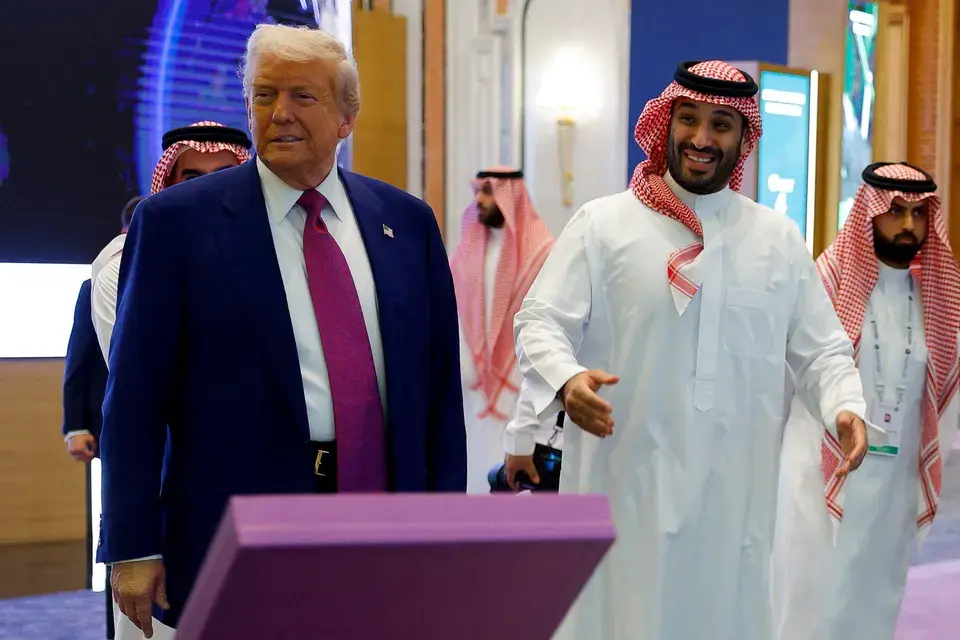
At the CNAS event last week, Chilukuri presented a report detailing ways for the US to counter China’s technological penetration in Saudi Arabia.
The publication traces long-running US-Saudi industry cooperation, and describes how China has rapidly entered the fray in the past 20 years, leading the charge on telecommunications, electric vehicles and smart cities.
The US should seize its “fleeting” advantage over China in best-in-class semiconductors and “secure its place as the kingdom’s preferred AI partner” by formalising the Nvidia-Humain deal, the report recommends.
Washington should also help Saudi Arabia to boost domestic fabrication of legacy chips, facilitate inbound investments in technology, help train the Saudi workforce, and lead in developing 6G infrastructure in the Gulf state, among other initiatives.
The upgrade from 5G to 6G connectivity will combine ground, air, sea, and satellite networks for more reliable global coverage. It will be essential for technological advances such as robotics, autonomous vehicles and remote surgery, but industry experts predict it is unlikely to be rolled out until 2030 in early markets.
US officials underestimate how far China has come in the development of technologies at scale, and how close Chinese companies are, perhaps a year or two away, to going toe-to-toe with American competitors even in the latest AI offering, said Mohammed Soliman, director of the Middle East Institute’s strategic technologies and cyber security programme.
“At every layer of the AI stack, there is a Chinese equivalent, and it’s good enough,” Soliman said during the event Thursday.
“One of the things that I find frustrating in Washington is there is this assumption that we only have to give crumbs,” he added. “This is not really what nations that are going through a major socioeconomic, technological transformation want, specifically if they have the capital to go somewhere and get what they need.”
In the past, Washington’s resistance to sharing drone technology enabled China “to effectively take over” Middle Eastern markets, according to Mohammed Al-Sudairi, lecturer in politics and international relations at the Australian National University’s Centre for Arab and Islamic Studies.
“I think a major difference between Chinese and American companies is the willingness of Chinese actors to indigenise technology and share it with Saudi equivalents,” Al-Sudairi said, cautioning this might change as China begins offering higher-tier products.
Increasing geopolitical tensions in the Gulf, and Israel’s strike against Hamas in Doha earlier this month, further complicate the picture and deepening the “crisis of trust” between the US and Saudi Arabia, according to Al-Sudairi.
By Valentina Pasquali
September 23, 2025, 5:06 PM


Comentários